
When looking to grow your digital presence, there are a multitude of tasks, and the hardest has to be managing and posting content online. For most business owners, leaving a site to sit doesn't cut it; you need to be constantly evolving to stay competitive. It's a constant competition for the top spot, and with mounting pressure to ensure you are seen, many business owners are switching to AI-generated blogs to keep up, unaware of the true risks.
Where the true cost lies
It seems to have crept into every corner of the business world, from accounting to marketing. AI is the next big revolution in how we, as business owners, need to keep up. In the past, we were taught to rely on new tools and switch our entire systems over without a second thought. We were taught to learn, to evolve, but now it seems to be the opposite. Tools like AI, if used wrongly, can severely hurt your business even if it seems like nothing has changed. From fewer backlinks to the deindexing of your site, you need to be careful when using AI tools, specifically in blogs.
This article was originally supposed to be about AI across your entire digital presence, until I discovered a statistically proven pain point in the blog space that has recently emerged. Blogs that use AI-generated text receive 61% fewer backlinks. That number is huge, but to people unaware of digital marketing, it may seem unimportant. I've even been asked, "Backlinks are not on your site, so why are they so important?"
The simplest answer is that they show how trustworthy you are.
Let's think of a restaurant, you may go to their site to look at their menu, but does that decide if you're going to dine there? Most likely, no. You look at the reviews. You look at articles discussing whether they have any good food. Outside knowledge builds trust, and that makes you hungry.
Google works the same way. Users are hungry for information, starving for it, and want the quickest path to get their answer. Search engines' whole purpose is to serve you the best information; in order to do that, they check your "reviews" (your backlinks) to see if you're a trustworthy site before showing you at the top of the list.
But how does this tie into AI?
Think about if you went into a restaurant starving, you want something fresh, but instead were served reheated slop from a bag. You would not want to recommend that restaurant to others, right? AI text works the same; your stale text that an AI spat out doesn't get other people excited to recommend you to others. You're less likely to be shared, and you're perceived as unsourcable in any professional context. That text you generated in 2 seconds was also given to someone else 10 minutes ago. It lacks flavor.
The rise of the dead internet.
After learning about the backlinks issue, I wondered what else might be hurting business owners' blogs. The first thing I thought of was the dead internet, a niche talking point about the state of the digital world that is slowly becoming reality for business owners. Originally, online users theorized that a majority of the internet consisted of bots and abandoned webpages, but in 2023, talking points shifted towards AI. Whole webpages were rewritten to include AI text; what was original now became generic. Now, in 2026, this has surged into entire AI-generated websites, and Google hates it.
Just as much as others don't want to backlink AI content, Google doesn't want to show it either. Human content in the rise of AI has somehow remained king, with around 80% of content at the top of Google being human-made, despite 74.2% of new pages using AI. Just by making creative content yourself, you stay at a huge advantage over the competition, as most of it ends up on the back pages of the dead internet, never to be seen. The disappointing part is that 95% of marketers have adopted AI and many use it for automation, despite the evidence that it's hurting your SEO performance.
"AI tools are not a replacement for your own creativity; those who miss this concept end up on the dead internet" -Austin Minick
The risk of deindexing and being viewed as slop
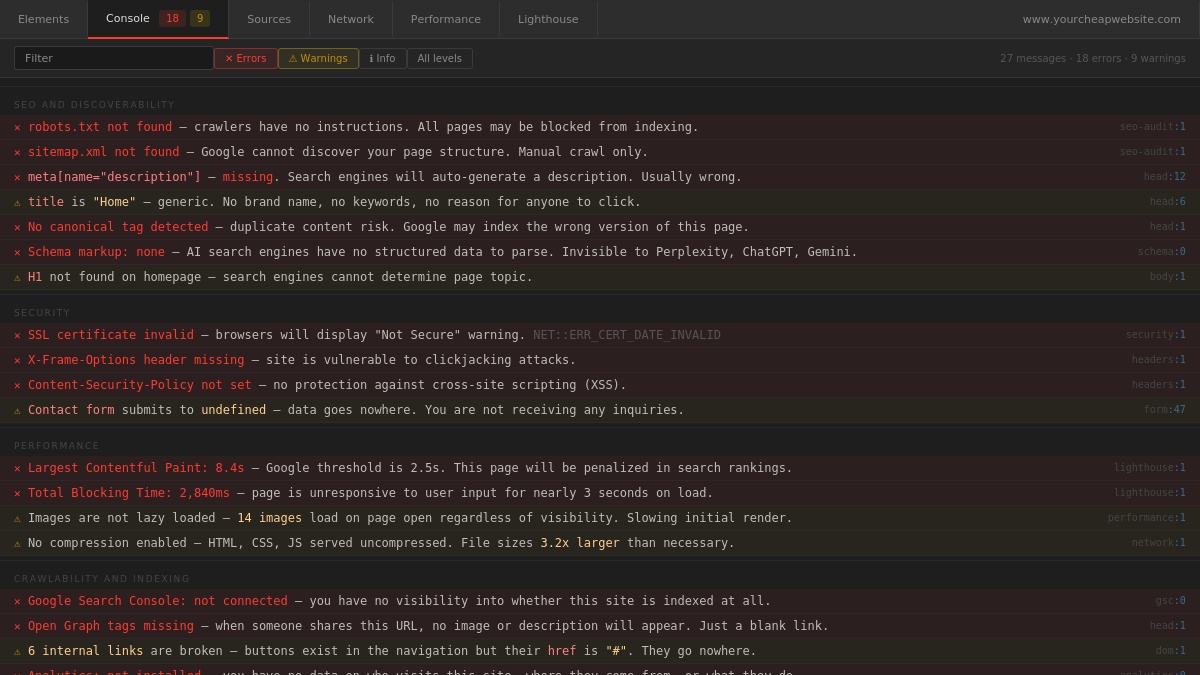
I've already broken down the risk of AI websites in my article, "The $400 Website Epidemic," and how it misses vital infrastructure a site needs, but what this new deep dive uncovered is that while yes, you run the risk of missing vital SEO components that will flat out stop you from being seen.
Those who do break out of that risk are deindexed 3.2 times the rate of human-made sites. In countless Google updates, there is evidence that a majority of sites that get scrubbed contain AI-generated text or even AI-generated automation.
It is up to you to grow your digital presence, and in the age of the internet, where automation is being glorified, you need to think critically about what it could mean for your brand. We have seen countless times that brands that take content and art seriously online have severely overperformed those that don't, and there is no way to automate creativity and connection. So next time you're worrying about how your competitors are able to print out content, know that your time to make quality blog posts is what makes you stand out.